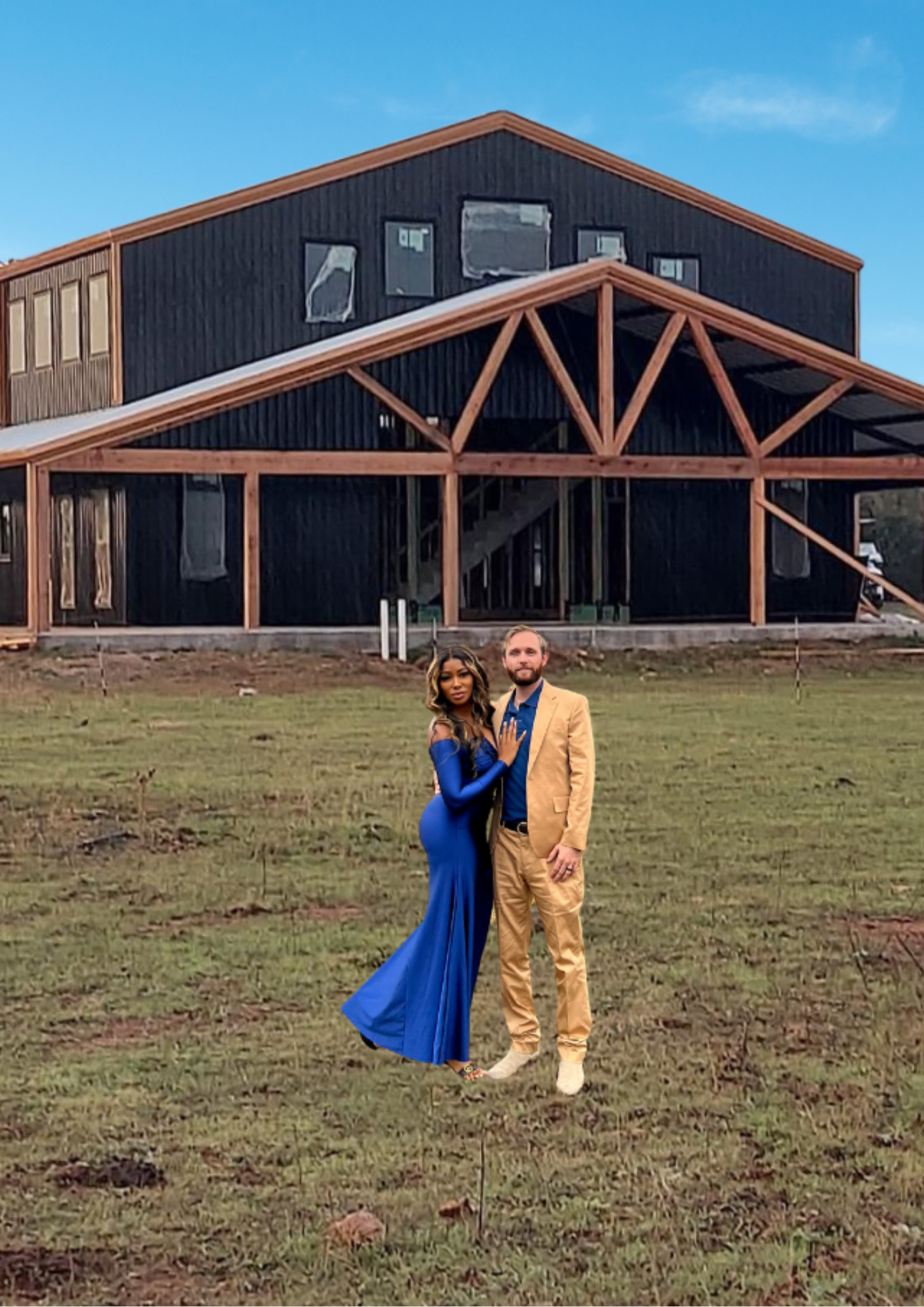
When Tucker first suggested we start documenting our life together in Austin, I thought he meant a casual Instagram account. Something fun. A hobby. What I didn't expect was that pointing a camera at our everyday life — the good mornings, the hard conversations about our barndominium budget, the Sunday drives through the Hill Country — would become one of the most clarifying things we'd ever done for our relationship. Content creation didn't change who we were. It just made us look at who we were more closely. And mostly, we liked what we saw.
1. We Learned to Communicate With an Audience in Mind
When you create content as a couple, you have to agree on the story you're telling. Not manufacture one — agree on it. Early on, Tucker wanted to post more build updates and I wanted to post more lifestyle content. That creative tension forced us to have real conversations about what we actually valued, what we wanted our life to look like, and who we were creating for. Those conversations extended well beyond the content. We became better at articulating what we wanted — in our work, in our home, in Austin, in our future. Having to frame your life as a narrative for other people first requires you to understand that narrative yourself.
2. We Got Radically Better at Handling Disagreement
The first time we had a disagreement on camera — about which countertop material to use in our barndominium — we almost didn't post it. It felt too exposed. We posted it anyway. The response was overwhelming. People loved it not because we fought, but because we worked through it. Since then, we've learned that how you handle conflict is actually part of your content. Audiences don't want to watch a perfect couple. They want to watch a real one. The skills we developed to disagree gracefully on camera — listening before responding, staying curious instead of defensive, being willing to say "you're right" — are the same skills that make us better partners off camera.
Disagreement on camera taught us that conflict doesn't have to be destructive. It can be creative. Some of our best content decisions came out of arguments. Give each other the grace to be wrong, the space to change your mind, and the security to say what you actually think.
3. We Built a Shared Vision for Our Future
Before content creation, Tucker and I had loose ideas about what we wanted our life to look like. After a year of creating content together — documenting the barndominium build, exploring Austin, building relationships with brands we respected — we had something more concrete: a shared visual language for what we were building. We could point at our content and say "that — that feeling, that aesthetic, that pace of life — that's what we're working toward." Content creation gave our ambitions a form. It's hard to work toward something you can only feel. It's much easier when you can see it.
4. We Became Each Other's Biggest Creative Advocates
Somewhere between our third and fourth month of consistent posting, something shifted. Instead of competing creatively — whose idea was better, whose aesthetic should dominate — we started building on each other. Tucker would have an idea and I'd immediately start thinking about how to make it stronger. I'd have a concept and Tucker would figure out how to execute it technically. The creative relationship became genuinely collaborative in a way our personal relationship had always aspired to be but hadn't fully achieved. There's something about having a shared creative project that activates a different kind of generosity between two people. You stop protecting your individual territory and start protecting something you built together.
5. We Created a Record of Who We Are Right Now
This might be the most underrated gift of building a content brand as a couple. We have a real, searchable, watchable record of who we were in our late twenties — what our Austin apartment looked like, how we talked to each other, what we cared about, what made us laugh. Our barndominium build is documented in a way our parents' homes never were. Our first road trips through the Texas Hill Country exist in full color, with audio. Years from now, we'll be able to watch ourselves at this exact moment of our lives and remember not just what happened, but how it felt. That's not a content strategy. That's a love story with timestamps.
The challenges are real — the disagreements about creative direction, the pressure to post consistently, the occasional tension between living your life and documenting it. But the version of us that exists because of this work is more intentional, more communicative, and more aligned than the version that existed before. If you're a couple on the fence about creating together, our honest answer is: do it. Not for the followers. Not for the brand deals. Do it for the conversations it will force you to have, and the clarity it will give you about what you're building — together, in whatever city, in whatever chapter of your life you're in.